Lao Chen, the founder of a smart-hardware company, suddenly died of a heart attack at just 42. He held 60% of the equity and was the controlling shareholder.
After the funeral, Lao Chen’s wife came to the company with their marriage certificate, saying she would inherit her husband’s equity and serve as the legal representative. The company’s co-founder panicked: with Lao Chen gone, the company was at a critical stage of its Series B financing, and the investor made clear that if the equity structure was unstable, the money would not be invested.
More tricky still, Lao Chen’s father — an elderly man with no business acumen and a strained relationship with the founding team — also claimed his right, as a statutory heir, to a share of Lao Chen’s equity.
The three parties each stuck to their own story; the company was paralyzed for two months, and the Series B financing fell through.
This case is not made up; it is a real dispute that occurred. It exposes a legal blind spot that the vast majority of entrepreneurs never realize:When you die, who inherits your equity is not actually up to you — it is up to the law’s default rules.
I. The Default Rule: Shareholder Status Can Be Inherited
Pursuant to Article 90 of the newly revised Company Law, effective July 1, 2024:
After the death of a natural-person shareholder, his lawful heirs may inherit the shareholder status; provided, however, that the articles of association provide otherwise.
There are two key words:“may be inherited” and “the articles of association provide otherwise”。
That is to say, by default the law provides that after a shareholder’s death, his spouse, children, and parents may all become company shareholders — whether you like it or not, and whether these heirs know how to run a business or have any attachment to the company.
This is the greatest shock to the “personal nexus” of a limited liability company: the company was originally “brothers who fought together,” yet suddenly a “stranger by inheritance” appears.
II. What Happens If No Articles-of-Association Clause Is Written
If no special agreement is made in the articles of association, a chain reaction will follow:
- All heirs enter the register of shareholders: the spouse, children, and parents divide the equity equally according to the statutory order of inheritance, and a company may suddenly gain five or six more shareholders;
- Voting rights are fragmented: the original decision-making mechanism in which one person had the final say fails completely, and major matters fall into deadlock;
- Heirs demand dividends and inspection of the books: property rights follow, and the company’s operations are directly disrupted;
- A liquidation crisis may be triggered: in extreme cases, inheritance disputes render the company unable to operate normally, or even lead to revocation of its business license.
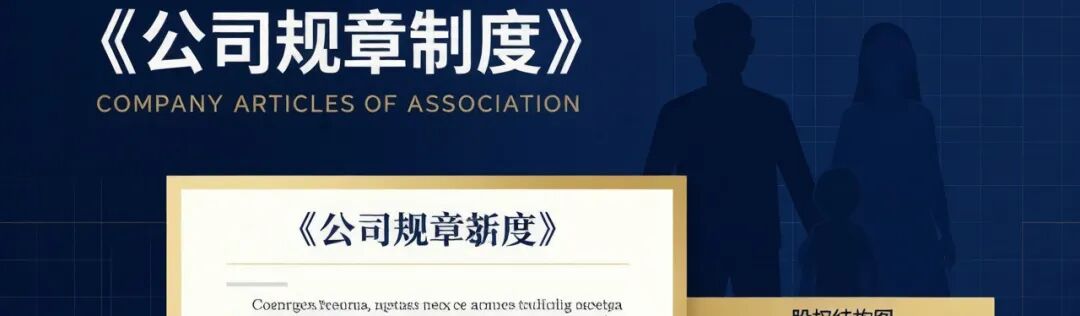
III. How to Draft the Articles of Association to Lock In the Risk
In practice, I advise entrepreneurs to include the following combination of “inheritance-restriction clauses” in their articles of association:
| Clause Type | Example | Effect |
|---|---|---|
| Inheritance-Exclusion Clause | “After a shareholder’s death, his heirs are only entitled to inherit the property interests in the equity and do not automatically acquire shareholder status” | Prevents heirs who lack business acumen from entering the company directly |
| Repurchase-Obligation Clause | “Where the heirs do not acquire shareholder status, the company or a shareholder designated by its articles of association has the right to repurchase their equity at the agreed price” | Gives the equity an exit, enabling a cash exit |
| Valuation-Method Clause | “The repurchase price is calculated as the audited net assets of the prior year × the shareholding ratio, or determined by the agreed appraisal method” | Avoids valuation disputes |
| Voting-Rights-Arrangement Clause | “After an inheriting shareholder acquires status, his voting rights are exercised on his behalf by a shareholder designated by the board of directors” | Maintains decision-making stability |
Note: articles-of-association clauses are not to be written carelessly. If poorly drafted, they may be declared invalid by a court — for example, if they completely strip the heirs of property interests, or the repurchase price is manifestly unreasonable and unfair. This is why the design of the articles of association must involve a professional lawyer.
IV. Recommendations for You
If you are starting a business or about to register a company, be sure to check three things:
- Does the articles of association include an inheritance-restriction clause? If not, it is still in time to add one now — amending the articles requires approval by more than two-thirds of the voting rights, and it is easiest to pass while everyone is still “on the same side”;
- Have you signed a shareholders’ agreement with the core shareholders? A shareholders’ agreement can supplement matters not written in the articles of association — a double safeguard;
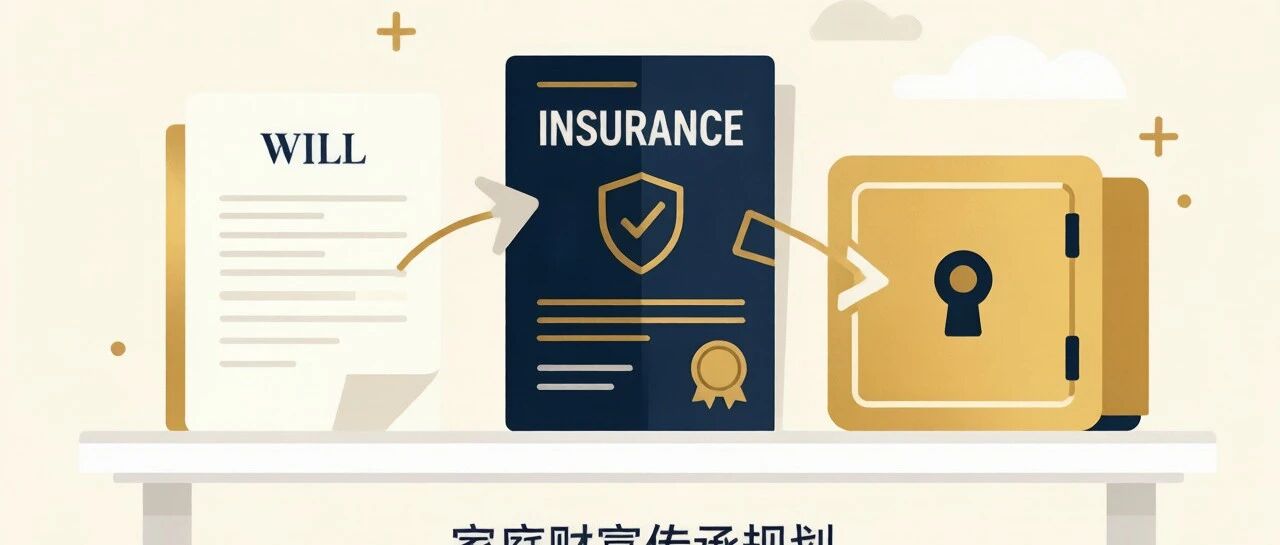
- Have you made estate arrangements? Wills, insurance, trusts — I will explain these in detail in the next article.
Lao Chen’s case finally ended this way: his wife inherited the equity and became a shareholder, but the co-founder exercised the right of first refusal under the shareholders’ agreement and bought out the equity shares of Lao Chen’s father and children at an appraised price, only then stabilizing the company. But this process took a full year and burned through the Series B financing.
Do not let your company become the next Lao Chen.
📩 Reply “Charter Customization” via private message, to obtain the checklist of key points for drafting equity-inheritance-restriction clauses, or to book a one-on-one consultation.
Lawyer Kevin Jun Lin . Gongsi Fabao · Focused on Corporate Legal Practice
Disclaimer
This article is for general reference only and does not constitute legal opinion or advice. For specific legal issues, please consult a professional lawyer. The case in this article is adapted from real events; the company names and details involved have been anonymized.
Lawyer Kevin Jun Lin
Senior Corporate Lawyer · Industry Legal Practice Expert
WeChat Official Account: Gongsi Fabao
Follow “Gongsi Fabao” to get more professional legal-practice information
Scan the QR code or search “Gongsi Fabao” on WeChat to ask questions directly in the Gongsi Fabao official account
💬 Feel free to leave your views and reasons in the comments
About the Zhenpin Lawyer Team
Lawyer Kevin Jun Lin — Today’s Author
On-the-job PhD candidate in Civil and Commercial Law at China University of Political Science and Law. Combines deep theoretical grounding in company law with extensive practical experience, focusing on company law, equity disputes, corporate compliance system building, and data compliance and product-quality disputes.
Lawyer Yan Ge:Founding partner of the law firm, with decades of frontline legal experience and hands-on practice across the courts, supervision, justice, and enterprise dimensions.
Lawyer Lin Bing:27 years in practice, with a dual background in law and finance, having handled over 2,000 litigation and non-litigation matters.
Further Reading
If you need professional support in shareholders’ agreements, investment-terms review, or equity disputes, please feel free to contact Lawyer Kevin Jun Lin (Shenzhen Corporate Lawyer) for a one-on-one consultation.
5 responses to “When a Founder Suddenly Dies, Who Gets the Equity? Without This Clause in the Charter, Everything Changes”
-
[…] […]
-
[…] […]
-
[…] […]
-
[…] […]
-
[…] […]
最近文章




Online Consultation
Or scan the QR code to reach Lawyer Kevin Jun Lin on WeChat

Leave a Reply