
This article addresses the high-frequency dispute of “one spouse transferring equity at a low or gratuitous price to shift assets before divorce.” Combining the creditor’s revocation right under Book III (Obligations) of the Civil Code, the spousal property protection rules under the Marriage and Family Book, and the doctrine of voidness for malicious collusion, it maps out two parallel remedial paths and the adjudication standards for three core contested issues.
Core Conclusion (Answer First)
When one spouse transfers equity at a low or gratuitous price to a relative before divorce, the other spouse has two remedial paths:
- Path One — Creditor’s Revocation Action: under Civil Code Art. 538 (revocation of gratuitous transfer) or Art. 539 (revocation of transfer at a manifestly unreasonable low price), “undo” the transfer and restore the asset.
- Path Two — Less or No Share for Hidden/Transferred Property at Divorce: under Civil Code Art. 1092, the transferring spouse receives less or none of the share in the divorce division. If the transferee and transferor acted in malicious collusion, the transfer may also be voided under Civil Code Art. 154.
Three contested issues decide success or failure: the timing of the transfer, the reasonableness of the consideration, and whether the transferee had knowledge.
I. A Devastating Discovery for the Spouse
Old Zhang and Xiao Li were married for twelve years and jointly ran a building-materials company; Old Zhang held 70% of the shares. In 2024 their relationship broke down and Xiao Li filed for divorce. Old Zhang appeared cooperative but, three months before the divorce suit was filed, secretly transferred his 70% stake to his younger brother Zhang Er at the “original value” of RMB 200,000—while the company’s net-asset valuation exceeded RMB 8 million.
Xiao Li’s lawyer discovered: at the time the transfer agreement was signed, the company was negotiating a major order and its valuation was about to double; Zhang Er had never participated in management and the transfer price had never been actually paid; and the WeChat chat between Old Zhang and Zhang Er plainly read, “Put it in your name first, we’ll transfer it back after the divorce.”
Can Xiao Li get it back? The law offers not one path but a “combination punch” of three.
II. Legal Characterization: Whose Right Is Infringed by the Low-Price Transfer?
To understand the remedies, first clarify the nature of the infringed right. A spouse holds a “joint co-ownership” in the marital community property and may not dispose of it unilaterally before division. But the equity is registered in one spouse’s name and has external public-trust effect, creating tension between the “internal” and “external” relationships.
| Remedial Path | Legal Basis | Conditions | Legal Effect |
|---|---|---|---|
| Creditor’s revocation action (gratuitous) | Civil Code Art. 538 | Transferor gratuitously transfers property, affecting creditor’s claim | Transfer voided; equity restored to transferor |
| Creditor’s revocation action (low-price) | Civil Code Art. 539 | Transfer at manifestly unreasonable low price, transferee aware | Transfer voided; equity restored to transferor |
| Less or no share at divorce | Civil Code Art. 1092 | One party hides or transfers marital community property | Transferring party gets less or none in division |
| Void for malicious collusion | Civil Code Art. 154 | Parties collude maliciously to harm another’s lawful interest | Transfer void ab initio |
The key: Paths One, Two and Four attack the validity of the transfer itself from the “external relationship”; Path Three proceeds from the “internal relationship,” does not directly void the transfer, but punishes the transferor in the divorce division. In practice the two paths run in parallel—first “claw back” the equity via revocation, then claim a reduced share in the divorce division.
III. Legal Rationale: Where Revocation Meets Spousal Property Protection
The revocation right (actio Pauliana) originates in Roman law—a classic institution for creditors to preserve claims. Its core logic: a debtor who, knowing he is in debt, actively diminishes his own assets (giving away for free, selling cheap) so the creditor cannot be satisfied, violates good faith; the law empowers the creditor to “revoke” that disposition, returning the asset to the debtor for enforcement or division.
Arts. 538 and 539 of the Civil Code divide revocation into two tiers:
- Art. 538 — Gratuitous Act Revocation: gratuitous transfer of property, gratuitous assignment of claims, malicious creation of security, etc. does not require transferee bad faith. Because a gratuitous disposition yields “zero gain” to the debtor, revocation harms no consideration interest of the transferee regardless of good or bad faith, so the threshold is lowest.
- Art. 539 — Onerous Act Revocation: transfer at a “manifestly unreasonable low price” requires the transferee’s knowledge. In onerous transactions the transferee paid consideration; if he reasonably relied on the transaction’s validity, the law protects transactional security first; revocation is available only when the transferee “knew or should have known” the transfer harmed the creditor.
The specificity of spousal property protection: in the divorce context, a spouse’s right in the community property is “claim-like”—the claim for division is essentially a claim over the community property and belongs to the law of obligations. Thus, when one party transfers community property (equity) at an unreasonable low price to a relative, the other may exercise revocation as a “creditor.” The Supreme People’s Court has confirmed in relevant rulings that where one spouse transfers community property to a third party at a manifestly unreasonable low price, the other spouse may seek revocation under the contract-law revocation rules.
IV. Legal Basis: Specific Provisions and Core Contents
1. Civil Code Art. 538 (Revocation of Gratuitous Transfer)
“Where a debtor gratuitously disposes of property rights by waiving claims, waiving claim security, gratuitously transferring property, etc., or maliciously extends the performance period of due claims, thereby affecting the realization of the creditor’s claim, the creditor may request the people’s court to revoke the debtor’s act.”
Core elements: ① gratuitous disposition by the debtor; ② affecting realization of the creditor’s claim; ③ transferee bad faith not required.
2. Civil Code Art. 539 (Revocation of Unreasonable Low-Price Transfer)
“Where a debtor transfers property at a manifestly unreasonable low price, transfers at a manifestly unreasonable high price, or provides security for another’s debt, thereby affecting the realization of the creditor’s claim, and the debtor’s counterpart knew or should have known the circumstance, the creditor may request the people’s court to revoke the debtor’s act.”
Core elements: ① transfer at a manifestly unreasonable low price; ② affecting realization of the claim; ③ counterpart knew or should have known (transferee bad faith).
3. Civil Code Art. 1092 (Consequences of Hiding/Transferring Property at Divorce)
“Where one party hides, transfers, sells, damages, or squanders community property, or forges joint debts to encroach on the other’s property, that party may be given less or none of the community property in the divorce division. After divorce, if the other party discovers such acts, it may file suit with the people’s court to request re-division of the community property.”
Core elements: ① one party hid/transferred etc.; ② the subject is community property; ③ transferor gets less or none in division; ④ post-divorce discovery allows a separate re-division suit.
4. Civil Code Art. 154 (Void for Malicious Collusion)
“A civil juristic act in which the actor and the counterpart collude maliciously to harm the lawful interests of another is void.”
Core elements: ① “malicious collusion” between actor and counterpart (common intent + harmful purpose); ② harmed another’s lawful interest; ③ void ab initio.
5. Civil Code Arts. 540–542 (Rules on Exercising Revocation)
Art. 540 limits the revocation scope to the creditor’s claim; Art. 541 provides the right is exercised within one year from when the creditor knew or should have known the revocation ground, and lapses five years from the act; Art. 542 provides the act is void ab initio once revoked.
V. Judicial Adjudication Rules: How the Three Contested Issues Are Decided
Contested Issue 1: Timing — Is It Within the “Divorce-Sensitive Period”?
The timing of the transfer is a key review focus. Transfers in the following windows face the strictest scrutiny:
- Within 6 months before the divorce suit is filed: courts are highly alert to “malicious transfer.” The SPC has noted in multiple cases that property changes near a pending divorce suit warrant careful review of authenticity and consideration reasonableness.
- During separation: once the relationship has broken down and the parties live apart, the factual “joint effort” basis is lost; a disposition by one party is more readily deemed unauthorized transfer.
- During litigation: a “transfer during litigation” is almost certainly deemed malicious.
Reverse rule: a transfer during a period of good relations and normal cohabitation is generally not presumed malicious, absent other evidence of premeditation.
Contested Issue 2: Reasonableness of Consideration — What Is a “Manifestly Unreasonable Low Price”?
In practice, courts generally use “transfer price below 70% of the market price at the time and place of the transaction” as the reference for “manifestly unreasonable” (drawn from the bankruptcy-law judicial interpretation on “manifestly unreasonable prices” and the 70% standard in Art. 19 of the Contract Law judicial interpretation II, which continues to be referenced after the Civil Code took effect).
| Method of Determination | Applicable Scenario | Key Evidence |
|---|---|---|
| Net-asset valuation of the company | Company operates normally with financial statements | Apply for judicial valuation; compare transfer price against it |
| Registered-capital comparison | Equity transferred at original value; company unprofitable | Registered-capital share vs. actual net assets |
| Recent transaction reference | Company had other equity transfers recently | Use recent transaction price as market reference |
| Auction/bidding reference | Company assets once entered auction | Use auction valuation as reference |
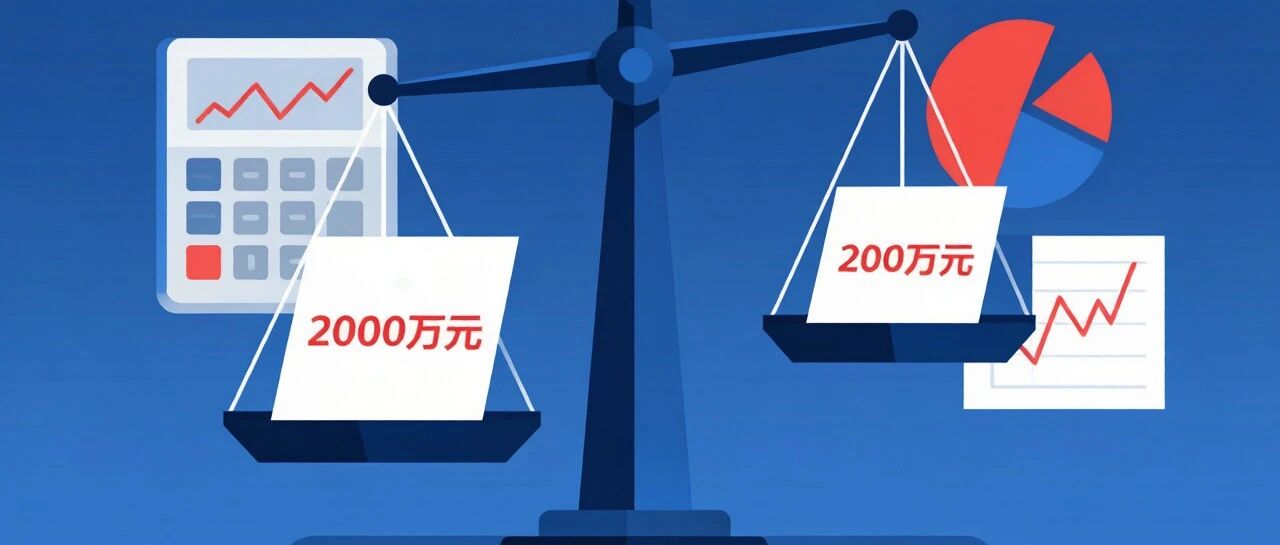
Practical point: transferring a profitable company’s equity at “registered-capital original value” is a classic “manifestly unreasonable low price.” In the case above, Old Zhang transferred equity worth RMB 8 million net assets for RMB 200,000 (original value)—only 2.5% of net assets, far below the 70% standard.
Contested Issue 3: Transferee’s Knowledge — Kinship Presumes Bad Faith
Whether the transferee “knew or should have known” the transfer harmed the creditor is the key element for Art. 539. Factors in practice:
- Close kinship with the transferor: courts tend to presume close relatives have high awareness of family finances and marital status; when the spouse is asserting division or about to file for divorce, it is unlikely the relative “didn’t know.”
- No actual consideration paid: a price stipulated but unpaid, or a “debt offset” with no genuine creditor-debtor support, is strong evidence of transferee bad faith.
- No participation in management, no understanding of company value: if the transferee neither manages nor inquires after the transfer, merely “holding in name,” courts lean toward finding him not a real transferee but a tool for transfer.
- Direct evidence such as WeChat/chat records: as in the case, “put it in your name first, transfer back after divorce” can be decisive proof of malicious collusion.
Application of Path Two — the Art. 1092 discretion for “less or no share”: even if revocation fails (e.g., limitation period lapsed), Art. 1092 still applies independently. Courts weigh the transferred value as a share of community property, the transferor’s fault, and the impact on the other party to set the reduced proportion. In practice the transferor may receive 10%–30% less than his due share, or none.
Classification of adjudication scenarios:
- Scenario 1: Gratuitous transfer to a relative — satisfies both Art. 538 (gratuitous revocation) and Art. 1092; high revocation success and reduced share at divorce.
- Scenario 2: Low-price transfer to a knowing relative — satisfies Art. 539 and Art. 1092; kinship can presume knowledge.
- Scenario 3: Low-price transfer to a non-relative third party — Art. 539 requires independent proof of knowledge, harder; but if the price is extreme and no legitimate business reason exists, courts may directly apply Art. 154 for voidness.
- Scenario 4: Transfer years earlier (beyond 1-year period) — revocation lapses, but Art. 1092 is not time-barred (post-divorce discovery allows re-division); a reduced share is still claimable.
VI. Intersection with the Company Law: External Effect of Registration vs. Internal True Intent
1. Public Trust of Registration and Opposability of the Transfer
New Company Law (effective July 1, 2024) Art. 34 provides that an unregistered change of a registered item may not be asserted against a bona fide third party. This means: once the equity transfer is registered in the AIC, the spouse (non-registered right-holder) cannot directly claim ownership from the company; she must first “claw back” the equity through revocation or divorce-division litigation before dividing it.
2. Capital Contribution Liability in Equity Transfer
New Company Law Art. 88 provides that after transfer of un-expired capital subscription, the transferee bears the payment obligation, and if the transferee fails to pay on time, the transferor bears supplementary liability. In a malicious-transfer scenario, if the transferor shifts un-paid equity to a relative at “zero consideration,” the relative may face the contribution obligation while the transferor bears supplementary liability—the “transfer” does not truly shed the obligation but transmits the risk to the relative.
3. Special Scrutiny for One-Person Companies
New Company Law Art. 23(3) provides that where a one-person limited-liability company’s shareholder cannot prove the company’s property is independent from his own, he bears joint liability for the company’s debts. In a divorce-transfer scenario, if the transferor operates through a one-person holding platform, the risk of property commingling is further amplified.
VII. Practical Advice: What to Do When You Find Your Spouse Transferring Equity
1. Preserve First — Freeze the AIC Change
Upon discovering an ongoing or likely transfer, immediately apply to the court for property preservation to freeze the target equity’s AIC change registration. This is the most direct and effective way to stop completion or prevent “secondary transfer.” The application requires a guarantee and preliminary evidence of value and suspicion.
2. File the Revocation Action in Parallel — Mind the 1-Year Period
Under Art. 541, revocation is exercised within one year from knowledge and at most five years from the act. Start litigation immediately upon discovery; do not delay. Defendants are the transferor and transferee; the prayer is to void the transfer and restore registration.
3. Claim a Reduced/No Share under Art. 1092 in the Divorce Suit
In the divorce division, plead the transfer as grounds for a reduced share, submitting the transfer agreement, AIC records, unreasonable-price valuation, and transferee-knowledge evidence. Even if revocation fails on timing, Art. 1092 applies independently.
4. Apply for Court Compulsion of Key Evidence
For hard-to-obtain evidence (bank flows, WeChat records, company ledgers), apply for a court investigation order or direct court collection. Focus on: the transfer agreement and AIC timing, whether the price was actually paid, the net-asset valuation report, and communications between the parties.
5. Distinguish “Transfer” from “Normal Transaction”
Not every intra-marital equity transfer is malicious. A transfer with a legitimate business purpose (strategic investor, equity incentive), fair consideration, and proper procedure (other shareholders’ consent, preemptive rights) is a normal transaction. Exclude the “normal transaction” possibility when pleading revocation, or litigation risk rises.
VIII. FAQ
Q1: My spouse gratuitously transferred the equity to his parents—can I revoke it?
Yes. Under Art. 538, a creditor may revoke a gratuitous transfer that affects claim realization, and transferee knowledge is not required. Gratuitous transfer to close relatives like parents is the most typical malicious-transfer scenario with a high revocation success rate. Mind the one-year period from when you knew or should have known.
Q2: How low is “manifestly unreasonable low price”?
In practice courts reference “transfer price below 70% of market price.” The equity “market price” is usually determined by net-asset valuation. If the net-asset value of the equity is RMB 1 million, a transfer below RMB 700,000 may be deemed “manifestly unreasonable.” The lower the price, the more likely the finding.
Q3: After winning revocation and getting the equity back, can I still make him take less?
Yes, in parallel. Revocation solves “clawing the equity back”; Art. 1092 solves “what penalty the transferor deserves.” The equity remains community property after restoration, but given the transferor’s malicious act, the court may award him less in division. The two paths are not mutually exclusive.
Q4: The transfer happened three years ago—can I still revoke?
Revocation may be impossible, but a reduced share is still claimable. The longest period is five years from the act (Art. 541); three years is within five, but you must prove “knew or should have known” within one year. Even if revocation lapses, Art. 1092 is not time-barred—discovery at or after divorce allows a reduced or re-division claim.
Q5: The transferee says “I didn’t know they were divorcing”—how do I prove he knew?
Close kinship is an important factor presuming knowledge. You can also prove: close contact between transferee and transferor (communications); the transferee’s understanding of the company (meetings, signed documents); no actual consideration paid (bank records show no payment); and the transferee exercising no shareholder rights after the transfer (no meetings, no dividends, no decisions). All point to “cooperating in the transfer” rather than a genuine transaction.


Leave a Reply