
This article takes the practical lever of “how to design the equity-inheritance clause in a company’s articles of association” for equity succession. Combining the company-autonomy theory under the Company Law, the validity-review rules for articles-of-association clauses, and judicial practice, it offers a four-layer design template and pitfall guide — from eligibility restrictions to buyback pricing.
The core conclusion (straight to the answer): Article 90 of the Company Law grants limited-liability companies a golden space for autonomy — “Upon the death of a natural-person shareholder, his lawful successor may inherit the shareholder qualification; provided, however, that the company’s articles of association may provide otherwise.” The real meaning is this: if the articles are silent, the equity follows statutory succession — the spouse, children and parents automatically become shareholders; only if the articles say so do you get to decide who may enter, at what price, and with how much power. A complete inheritance clause should contain a four-layer structure: ① restrictions on inheritance eligibility (exclusion or conditions); ② a buyback mechanism (trigger, buyer, price formula); ③ a valuation method (net-asset method / appraisal method / agreed formula); ④ voting-rights arrangements (an interim proxy mechanism). Amending the articles requires the approval of shareholders representing more than two-thirds of the voting rights (Company Law Art. 66) — the only window is to amend while the equity is still in your hands, your health is still good, and the other shareholders still speak to you as friends.
I. A “Partners Turned Strangers” Tragedy That Was Entirely Avoidable
Three university classmates started a business together: Lao Zhou 45%, Da Liu 35%, Xiao Zheng 20%. When they drafted the articles, the lawyer asked, “Should we add an equity-inheritance clause?” The three laughed: “We’re only in our thirties — how unlucky to write that now.”
Eight years later, Lao Zhou was diagnosed with late-stage cancer and died four months later. Lao Zhou held 45%. His successors were his wife and two minor children. With no inheritance clause in the articles, under the default rule of Art. 90, the three of them together automatically inherited 45% of the shareholder qualification.
What followed: Lao Zhou’s wife, knowing nothing about the company, became the representative of the largest shareholder bloc; she demanded account access, wanted a board seat, and opposed Da Liu’s financing plan (because it would dilute equity). More fatally, the minor children’s shares were voted by their mother as proxy, so every shareholders’ meeting felt like a family struggle session. Two years on, the financing collapsed, the team scattered, and Da Liu and Xiao Zheng were forced to buy back the equity and exit — at market price, emptying half a lifetime of savings.
The company was what Lao Zhou loved most in life, yet his equity became the knife that killed it. What killed the company was not death, but those three pages of articles copied from the administration’s template.
II. Legal Characterization: The Validity Spectrum of Inheritance Clauses
The “otherwise provided” in the articles on equity inheritance is not “write whatever you want.” By clause strength, it falls into four tiers:
| Clause type | Typical wording | Validity risk | Judicial attitude |
| Fully exclude inheritance + forced par-value buyback | “Upon a shareholder’s death, his successor may not inherit the shareholder qualification; the equity shall be bought back by the other shareholders at the original capital contribution.” | High risk A clause that completely deprives the successor of property interests, or sets a manifestly unfair price, may be held void | Tends to invalidate |
| Exclude inheritance + reasonable buyback | “Upon a shareholder’s death, the company / other shareholders shall buy back the equity at appraised value, and the proceeds belong to the successor.” | Mainstream valid What is excluded is the shareholder qualification; what is preserved is the property value | Generally recognized |
| Conditional inheritance | “The successor’s inheritance of shareholder qualification requires approval by a majority of the shareholders’ meeting” or “the successor must possess the capacity to serve” | Low-to-medium risk Must not变相 (in effect) completely deprive; conditions must be reasonable | Mostly recognized |
| Voting-rights restriction | “The equity inherited by the successor shall not carry voting rights, or shall exercise them at 50%, for two years from the date of inheritance.” | Contested zone Restrictions on self-interest rights (dividends) are void; pure voting-rights transition arrangements are mostly valid | Determined case by case |
A red line runs through the whole table: the articles may restrict “qualification” (the associational-interest right), but may not deprive “property” (the property right). A successor may be kept outside the shareholders’ meeting, but must not be expropriated of the equity’s value.
III. The Legal Rationale: A Tripartite Balance of Company Autonomy, Associational Nature, and Property Rights
1. The legislative turn of Art. 90. Old Company Law Art. 75 (old numbering) and the new Art. 90 share the same lineage: they defer the issue of inheriting shareholder qualification to the articles as the priority — the legislator acknowledges that the core value of a limited-liability company is the “association of persons” (associational nature); the trust and willingness to cooperate among shareholders should not be coerced by blood inheritance. A successor may inherit the property value, but “whether to admit him as a partner” should be autonomously decided by the company when adopting or amending the articles.
2. The boundary of autonomy: property rights are inalienable. But company autonomy hits two walls. First, equity is a property right protected by the Civil Code; the successor’s right of inheritance (Art. 1123, testamentary or statutory succession) is protected by law. The articles, as a contract among shareholders, cannot dispose of the successor’s rights — unless the successor agreed when joining (in fact succession occurs after the articles were fixed, and the successor never agreed). Second, articles are mostly adopted by a majority vote; if a majority were allowed to “legally swallow” a deceased shareholder’s equity at an unfair price through an articles clause, it would hand the majority a blank check to plunder the minority. The judiciary has therefore developed the balancing rule: “qualification may be restricted, but the consideration must be fair.”
3. Why two-thirds, not a simple majority. Amending the articles is a fundamental change to the corporate organism, reshaping the basic rights structure of shareholders. Company Law Art. 66(3) requires approval by shareholders representing more than two-thirds of the voting rights. This threshold in turn warns founders: every day you delay, assembling two-thirds may become one notch harder — equity-financing dilution, shareholder discord, and the founder’s deteriorating health all close the window.
IV. Legal Basis
- Company Law Art. 90: Upon the death of a natural-person shareholder, his lawful successor may inherit the shareholder qualification; provided, however, that the company’s articles of association may provide otherwise.
- Company Law Art. 66(3): Resolutions of the shareholders’ meeting to amend the articles of association, increase or reduce registered capital, merge, split, dissolve, or change the company form shall be adopted by shareholders representing more than two-thirds of the voting rights.
- Company Law Art. 89: A shareholder who voted against resolutions such as the transfer of major assets may request the company to buy back the equity (appraisal right of dissenting shareholders — an important reference for buyback pricing).
- Company Law Art. 84: Rules on notice and the right of first refusal for the outward transfer of equity (one of the reference systems for buyback-clause pricing).
- Civil Code Art. 1123: Upon the commencement of inheritance, statutory succession applies; where there is a will, testamentary succession or legacy applies.
- Civil Code Art. 1130: Shares of the same-order successors in the estate shall, as a rule, be equal (the rule for dividing jointly-held equity among multiple successors under statutory succession).
- Relevant provisions of the Supreme People’s Court’s Interpretation (I) on the Civil Code’s Succession Book: concerning the determination of the estate’s scope and the confirmation of the successor’s identity — the procedural basis when an inheritance clause is executed.
V. Judicial Adjudication Rules: Offensive and Defensive Points on Clause Validity
Scenario 1: The “buy back at original capital contribution” clause is challenged. Judicial tendency: after years of operation the net assets may be several times the registered capital; “buyback at original capital contribution” would leave the successor with almost nothing. Courts mostly hold such a price clause void or inapplicable on the ground of “violating the principle of fairness and变相 (in effect) depriving property rights,” and instead commission an appraisal to determine a fair price. Lesson: the appraisal fee saved by the price clause ends up as litigation fees.
Scenario 2: The “successor requires shareholders’ meeting approval” clause is bypassed. The successor requests change registration directly without approval, and the company refuses. Judicial tendency: such articles clauses are in principle valid; the registration authority and the court respect the autonomous arrangement of the articles. But if the shareholders’ meeting abuses the veto (refusing anyone’s inheritance without reason), the court may negate the veto effect based on rights abuse. A conditional clause must be paired with a “fallback arrangement if disapproved” (e.g., buy back at appraised value if disapproved), otherwise it creates a new deadlock.
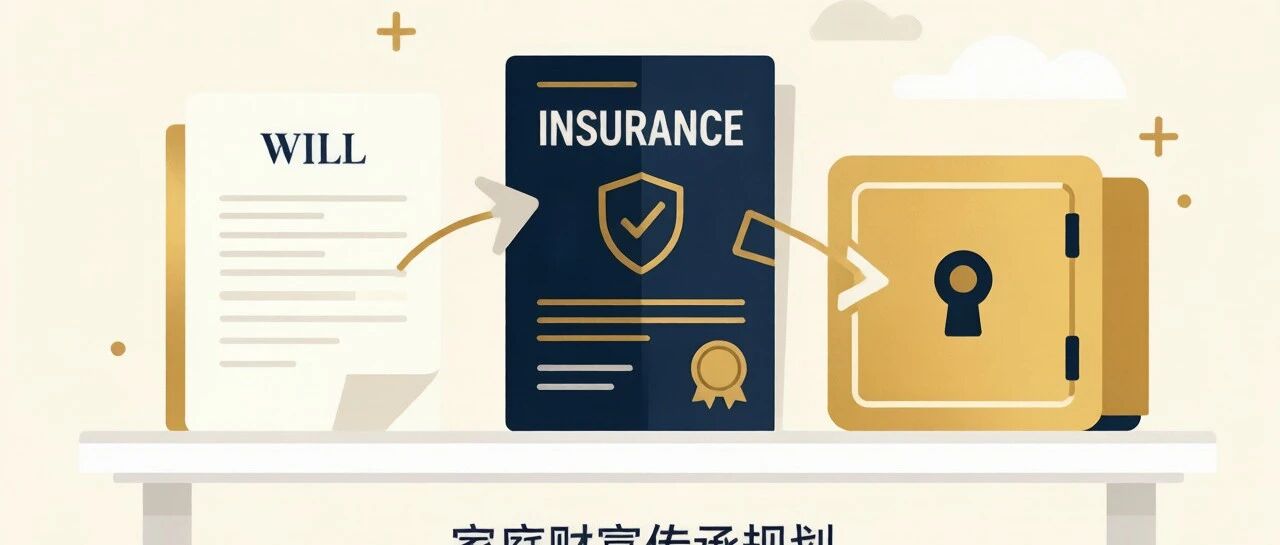
Scenario 3: The inheritance clause clashes with a will. The shareholder makes a will “all my equity to my son,” while the articles provide “equity bought back by the other shareholders.” Mainstream ruling: the articles, as an organizational rule effective erga omnes and preexisting the death, mean what the successor inherits is the buyback proceeds, not the shareholder qualification; what the will disposes of is in fact “the property interest corresponding to the equity.” The two should be designed in concert (see Part 6 of this series).
Scenario 4: Joint holding and exercise among multiple successors. With no will and no exclusion clause in the articles, the spouse, children and parents divide equally under Arts. 1127 and 1130, forming joint ownership of the equity. Judicial practice: the exercise of voting rights over jointly-held equity requires consensus or a designated representative; failure to reach consensus easily evolves into a corporate deadlock — precisely the core scenario the articles’ inheritance clause must prevent.
VI. Differentiated Design: Clause Recipes for Different Company Types
1. Single-shareholder company / husband-and-wife shop. Characteristic: there is no “other shareholder” to take over the buyback, so excluding inheritance is meaningless. Design points: ① coordinate with a will to clarify equity attribution (for a single-shareholder company, having the equity inherited by one person is more conducive to the company’s survival, avoiding multiple successors holding jointly); ② preset a backup legal representative; ③ if it is a husband-and-wife company, first resolve whether the equity is community property (Art. 1153), and the articles may provide a “formula for the surviving spouse to buy the other successors’ shares upon one party’s death.”
2. Multi-founder startup (2–5 founding shareholders). The type most in need of a complete four-layer clause: they mutually agree “upon the death of any shareholder, his equity shall be bought back by the remaining shareholders at a fair price, payable in installments” — in essence a mutual “partner insurance.” Points: installment buyback (e.g., 36 months) with annual-interest compensation, so the deceased shareholder’s successors are not left without cash while the other shareholders are not drained of liquidity in one shot.
3. Company with external investors. The investment agreement (SHA) usually already contains equity-restriction clauses; note the linkage between the articles’ inheritance clause and the SHA’s key-man clause: a founder’s death often triggers the investor’s buyback / liquidation preference, and the articles’ buyback pricing should be consistent with it, to avoid “paying twice.”
4. Employee shareholding platform (limited partnership). The inheritance of limited-partnership interests is governed by Partnership Enterprise Law Art. 50 — the partnership agreement may provide that the successor does not automatically acquire partner qualification. The platform’s partnership agreement and the parent company’s articles must be designed in sync, to prevent an employee’s successor from rushing into the platform upon the employee’s death.
VII. Practical Recommendations: Drafting Points and Pitfall Guide for the Four Layers
1. Layer one — inheritance-eligibility clause. Recommended wording: “Upon the death of a natural-person shareholder, his successor shall not automatically acquire shareholder qualification; the other shareholders have the right to acquire the equity under this article.” Avoid absolute phrasing like “the successor waives all rights.” It may be conditional: “If the successor is a person with full capacity for civil acts and has submitted a written undertaking to abide by these articles, he may become a shareholder upon approval by a majority of the shareholders’ meeting; if not approved, buy back under Article X.”
2. Layer two — buyback mechanism clause. State four elements: trigger point (date of death), buyback subject (other shareholders pro rata / company targeted capital reduction), payment arrangement (installments + interest + first installment not below 30%), and remedies for breach. Pitfall: do not name only the “company” as buyer — a company buyback is bound by capital-reduction procedures and the capital-maintenance principle, making it extremely slow; prefer the dual channel of “shareholder buyback primary, company capital reduction secondary.”
3. Layer three — valuation method clause. Three options: ① net-asset method (for asset-heavy companies, most recent audited net assets × shareholding ratio); ② appraisal method (agree “appraised by an appraisal institution jointly selected by both parties,” fallback “if negotiation fails, selected by court lottery”); ③ agreed formula (e.g., “average net profit of the last three years × PE multiple,” for steadily profitable companies). Pitfall: lock in “most recent period” rather than “at the time,” to prevent last-minute accounting maneuvers before death; also agree on a deduction for unpaid capital contributions (referencing the logic of Company Law Art. 88 — the subscribed amount must be deducted from the consideration).
4. Layer four — voting-rights arrangement clause. Transition design: “From the date of the shareholder’s death until the buyback proceeds are paid in full or the shareholder-qualification change registration is completed, the voting rights of that equity shall be exercised by all other shareholders pro rata / by the chairman; the dividend right (self-interest right) is unaffected.” Red line: you may only restrict voting rights and other common-benefit rights, never touch the dividend right or other self-interest rights — a clause restricting dividends is almost certainly dead.
5. Procedural points. Amending the articles requires approval by more than two-thirds of the voting rights: write it in one go while all founding shareholders are alive and on good terms; have new shareholders confirm acceptance of the clause in the admission documents (strengthening its effect against later-joining shareholders); before finalizing, have a lawyer run a “manifestly unfair” stress test — imagine you are the excluded successor; would you sue?
VIII. Frequently Asked Questions (FAQ)
Q1: The articles say “the successor may not inherit the equity” — isn’t that too cold-blooded, and won’t the law reject it?
Not cold-blooded, and the law does recognize it — provided money is paid. What is excluded is the “shareholder qualification” (associational interest); the successor still receives the fair consideration for the equity. What the judiciary rejects is only the clause that “neither lets you in nor pays you, or pays only a symbolic price.”
Q2: The articles have no inheritance clause now, and the major shareholder has died — can we still add one?
Hard. Amending the articles requires approval by more than two-thirds of the voting rights, while the deceased shareholder’s equity is in a pending-succession state and its voting-rights exercise is disputed; moreover, a post-hoc amendment smacks of targeting a specific estate, and its validity will be challenged. The window for an inheritance clause is in “life” — which is also the meaning of this article’s title.
Q3: The buyback price was written into the articles as “original capital contribution” — can it still be remedied?
There is room for dispute. In practice the successor may argue the price clause is manifestly unfair where the equity value has skyrocketed, and the court may commission an appraisal to reprice. It is advisable to amend the articles as early as possible to the appraisal or formula method — especially when the company has appreciated substantially.
Q4: A veto-style “requires shareholders’ meeting approval to inherit,” and the other shareholders simply refuse no matter what — what then?
This is exactly the root of deadlock. The clause must include a fallback: “If not approved, the other shareholders shall acquire the equity at a fair price.” A conditional clause without a fallback leaves the successor’s property right hanging in the air; the court will ultimately step in, and the outcome becomes even less controllable.
Q5: After the successor inherits the equity, can the company restrict his transfer of it?
A moderate restriction is permissible. The inheritance clause may provide that “if the successor transfers the equity within X years of acquiring shareholder qualification, the other shareholders shall have a right of first refusal on equal terms” — this is structurally identical with the right-of-first-refusal rule of Company Law Art. 84 and is generally recognized as valid. But a clause that completely prohibits transfer carries high risk and is not recommended.




Leave a Reply